
28 Apr How to Pick Safe and Comfortable Weather-Appropriate Outfits for Babies
Dressing a baby feels simple at first. However, once you realize how sensitive a newborn’s skin is and how quickly the weather can change, it becomes a more thoughtful task. Babies cannot tell you when they are too hot or too cold. Therefore, it falls on you to make the right choices every single day.
This guide walks you through everything you need to know. You will learn how to read the weather, choose the right fabrics, layer clothing properly, and avoid common mistakes parents make. By the end, you will feel confident dressing your little one for any season.
Why Weather-Appropriate Dressing Matters for Babies
Babies are not small adults. Their bodies regulate temperature very differently. A newborn loses heat much faster than an older child or adult. At the same time, they can also overheat quickly if dressed too warmly.
Overheating in babies is a serious concern. Research has linked overheating to an increased risk of Sudden Infant Death Syndrome (SIDS). On the other hand, getting too cold can lower a baby’s core temperature, which may lead to hypothermia in extreme cases.
Therefore, finding the right balance is not just about comfort. It is also about keeping your baby safe. Getting this right from the start builds a healthy habit that protects your child through every season.
Understanding Your Baby’s Temperature Needs
A good rule of thumb is to dress your baby in one more layer than you would wear yourself. If you are comfortable in a light sweater, your baby likely needs that sweater plus a thin vest underneath.
However, this rule is just a starting point. You should always check your baby’s neck or chest to see if they feel warm. These areas give a more accurate reading than hands or feet, which often feel cool even when the baby is perfectly warm.
Watch for signs of overheating too. A flushed face, damp hair, rapid breathing, or fussiness can all signal that your baby is too warm. Remove a layer and see if they settle down.
Choosing the Right Fabrics for Every Season
The fabric you choose matters just as much as the number of layers. Some materials breathe well and wick away moisture. Others trap heat or irritate delicate skin.
Best Fabrics for Warm Weather
In summer or in warm climates, go for lightweight and breathable fabrics. Cotton is the most popular choice because it is soft, natural, and allows air to circulate. Bamboo fabric is another excellent option. It is naturally moisture-wicking and feels silky against the skin.
Avoid synthetic fabrics like polyester in hot weather. These materials trap heat and can cause sweating and rashes. Additionally, steer clear of tight-fitting clothes that restrict airflow.
Best Fabrics for Cold Weather
In winter, you want fabrics that hold warmth without being too heavy. Merino wool is a standout choice. It regulates temperature naturally, meaning it keeps babies warm without overheating them. It is also surprisingly soft and less scratchy than regular wool.
Fleece is another warm, lightweight option. However, always use it as a middle or outer layer, not directly against the skin. Cotton still works well in winter as a base layer, especially for babies with sensitive skin.
How to Layer Clothing Like a Pro
Layering is the most effective way to dress a baby for changing weather. It allows you to add or remove clothing quickly depending on the temperature indoors and outdoors.
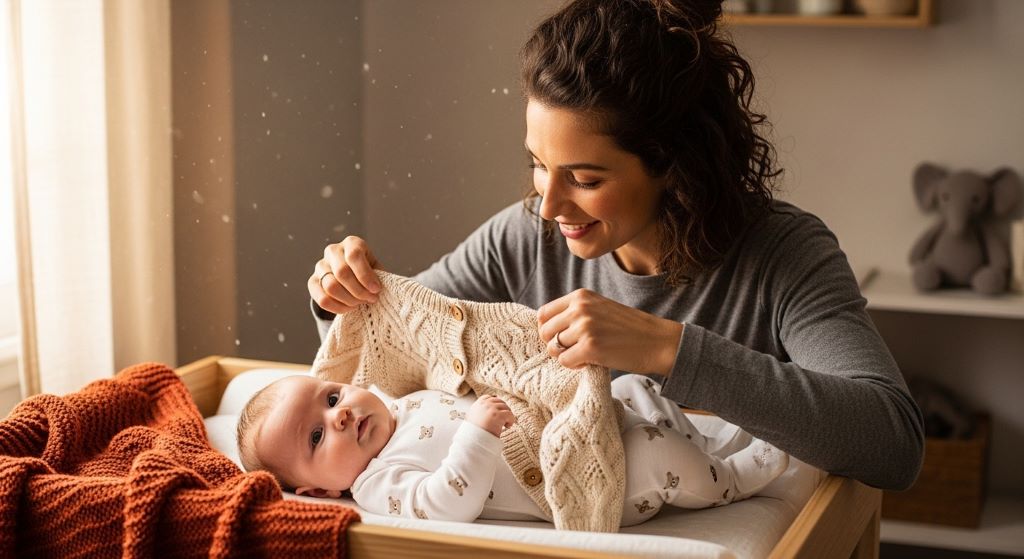
The standard approach uses three layers. The first is a base layer that sits directly on the skin. This should be soft and breathable, like a cotton onesie or bodysuit. The second is a middle layer for insulation, such as a fleece jacket or knitted sweater. The third is an outer layer for protection against wind and rain.
You do not always need all three layers. On a mild spring day, a single onesie might be enough indoors. However, if you are heading outside, adding a light cardigan gives you easy flexibility.
Layering Tips by Season
In spring and autumn, temperatures often swing from cool mornings to warm afternoons. A light jacket that zips on and off is your best friend. Start with a long-sleeve onesie and add a zip-up hoodie on top.
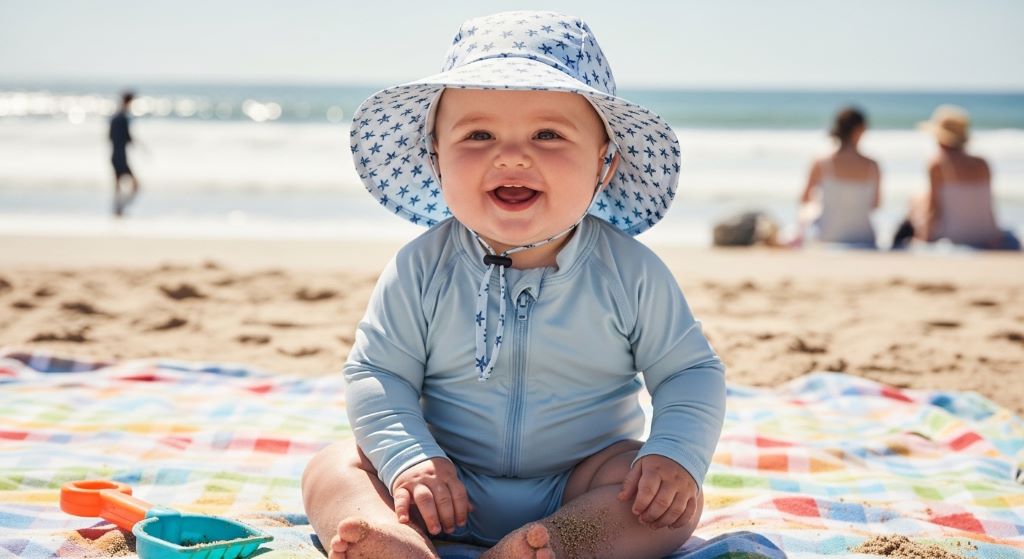
In summer, keep it simple. A short-sleeve cotton onesie is often enough. If you are heading to an air-conditioned space, carry a light muslin wrap to drape over the baby. Always add a wide-brimmed sun hat and UV-protective clothing if you are spending time outdoors.
In winter, layer a thermal or long-sleeve bodysuit under a warm outfit, then add a snowsuit or thick bunting for outdoor trips. Remember to remove the outer layer as soon as you step inside or into a warm car.
Dressing Babies for Specific Weather Conditions
Hot and Sunny Days
Direct sunlight can burn a baby’s skin very quickly. Choose outfits that cover the arms and legs with lightweight, UV-protective fabric. Dress your baby in light colors, as they reflect sunlight instead of absorbing it.
A cotton hat with a wide brim is essential outdoors. Additionally, try to limit time in direct sun between 10 a.m. and 4 p.m., when UV rays are strongest.
Rainy and Windy Days
Wind can make temperatures feel much colder than they actually are. On breezy days, add a windproof outer layer even if the temperature seems mild. A waterproof pram suit or jacket protects against both wind and light rain.
Wet clothing chills a baby very fast. Therefore, always keep a dry change of clothes in your bag when heading out on uncertain days.
Cold and Frosty Days
On very cold days, cover every part of the body. Use a hat that covers the ears, mittens, and warm booties or socks. The head is especially important because babies lose a large amount of heat through it.
However, be careful when traveling by car. Thick coats and snowsuits can interfere with a car seat harness and reduce its effectiveness. The safest approach is to place the baby in the car seat with thinner layers and then drape a blanket over the harness.
Safe Sleepwear for Changing Night Temperatures
Nighttime dressing deserves special attention. The room temperature changes throughout the night, and your baby cannot adjust their own covers.
For most babies, a sleeping bag or wearable blanket is the safest option. These are available in different tog ratings, which indicate how warm they are. A 0.5 tog is suitable for warm summer nights, a 1 tog works for mild weather, and a 2.5 tog is ideal for cooler rooms.
Avoid using loose blankets in the crib for babies under 12 months. They pose a suffocation risk. Additionally, keep the room temperature between 16 and 20 degrees Celsius (61 to 68 degrees Fahrenheit) for safe and comfortable sleep.
Common Mistakes to Avoid
Many parents overdress their babies out of worry. While it comes from a place of love, it can actually do more harm than good. Overheating is a real risk, especially during sleep.
Another common mistake is dressing babies in outfits with loose buttons, ribbons, or decorative strings. These are choking hazards and should be avoided entirely. Always choose simple, snap-button or zip-up designs.
Furthermore, do not forget about sun protection on seemingly mild days. UV rays can still be strong on overcast days. A lightweight UV-protective layer or cover is a smart habit year-round.
Finally, avoid hand-me-down clothing that has worn-out elastic or frayed fabric. Old clothing may not provide the same warmth or safety as newer pieces. Check for wear and tear before dressing your baby in anything second-hand.
Practical Checklist Before You Head Outside
Before stepping out with your baby, run through a quick mental checklist. First, check the current temperature and wind conditions. Second, decide how many layers your baby needs. Third, confirm that all fastenings are secure and nothing is loose or dangly. Fourth, pack an extra layer and a change of clothes in your bag. Fifth, check your baby’s neck after a few minutes outside to make sure they are comfortable.
This simple habit takes less than a minute and can save you a lot of trouble.
Conclusion
Dressing your baby for the weather does not have to be complicated. The key is to understand how their body works, choose the right fabrics, and master the art of layering. Always check for signs of discomfort, whether it is overheating or feeling too cold.
Remember to keep safety first, especially when it comes to sleepwear, car seat safety, and sun protection. With a little practice and the right knowledge, choosing weather-appropriate outfits for your baby will become second nature.
Frequently Asked Questions
How do I know if my baby is too hot or too cold?
Check the back of your baby’s neck or their chest. If the skin feels sweaty or clammy, they are likely too warm. If the skin feels cold to the touch, add a layer. Hands and feet are not reliable indicators, as they naturally run cooler.
Is it safe to use a blanket in the crib during winter?
For babies under 12 months, loose blankets in the crib are not recommended due to suffocation risks. Instead, use a sleeping bag with the appropriate tog rating for the room temperature.
How many layers should a newborn wear in winter?
A general guideline is to dress your newborn in one more layer than you would wear yourself. In cold weather, this typically means a base layer, a warm middle layer, and a protective outer layer when going outside.
Can babies wear wool directly against their skin?
Regular wool can be scratchy and irritating for delicate baby skin. However, merino wool is much softer and is generally safe for direct skin contact. Always test a new garment by checking for redness or irritation after wear.
What should I dress my baby in for the car during winter?
Remove thick coats or snowsuits before placing your baby in the car seat, as bulky clothing can compromise harness safety. Instead, use thin layers and place a blanket over the harness after buckling your baby in securely.
Related Topics:
How to Combine Play-Based Learning with Kids Care Therapy
Sorry, the comment form is closed at this time.