
31 Jan How to Combine Play-Based Learning with Kids Care Therapy
Play-based learning and therapeutic care create powerful combinations for children’s development. These approaches work together naturally, helping children heal while building essential skills. Parents and therapists can integrate both methods to support children facing developmental, emotional, or behavioral challenges.
Understanding how to blend play with therapy maximizes treatment effectiveness while keeping children engaged. This comprehensive guide explores practical strategies for combining these complementary approaches in home and clinical settings.
Understanding Play-Based Learning Fundamentals
Play-based learning uses natural play activities as educational tools. Children explore, experiment, and discover through hands-on experiences. This approach recognizes play as children’s primary method of understanding their world.
Research shows children retain information better through playful engagement than traditional instruction. Therefore, play-based methods support cognitive development, social skills, and emotional regulation simultaneously. The child-directed nature keeps motivation high and stress low.
Play-based learning differs from free play by incorporating intentional learning objectives. Adults structure environments and provide materials supporting specific developmental goals. However, children maintain agency over how they interact with these carefully chosen resources.
What Kids Care Therapy Encompasses
Kids care therapy includes various therapeutic interventions addressing developmental delays, trauma, anxiety, autism spectrum disorders, and behavioral challenges. Occupational therapy, speech therapy, physical therapy, and mental health counseling all fall under this umbrella.
Therapeutic goals might include improving motor skills, enhancing communication abilities, processing emotions, or developing social competencies. Traditional therapy often feels clinical and pressure-filled for children. Consequently, many children resist therapeutic activities that seem like work.
Play therapy specifically uses play as the therapeutic medium. Trained therapists observe play patterns, introduce therapeutic play scenarios, and guide children toward healing through playful interaction. Additionally, other therapy types increasingly incorporate play elements to improve outcomes.
Benefits of Combining Play and Therapy
Integration creates engagement that pure clinical approaches cannot match. Children naturally participate when activities feel playful rather than medicinal. Therefore, therapeutic progress accelerates when disguised as enjoyable play.
Play-based therapy reduces anxiety surrounding treatment. Children entering playful environments feel safer expressing difficult emotions and practicing challenging skills. Moreover, the relaxed state facilitates learning and processing traumatic experiences.
Parents observe more carryover to daily life when therapy incorporates play. Skills learned through play transfer more readily to real-world situations than those practiced through drills. Additionally, play-based approaches teach problem-solving alongside specific therapeutic targets.
According to Psychology Today, play therapy effectively treats childhood anxiety, trauma, and behavioral issues by allowing children to express themselves through their natural language of play.
Creating Therapeutic Play Spaces at Home
Designated play areas support both learning and therapy goals. Choose spaces with adequate room for movement activities and quiet corners for focused work. Natural lighting and minimal distractions help children concentrate during therapeutic play sessions.
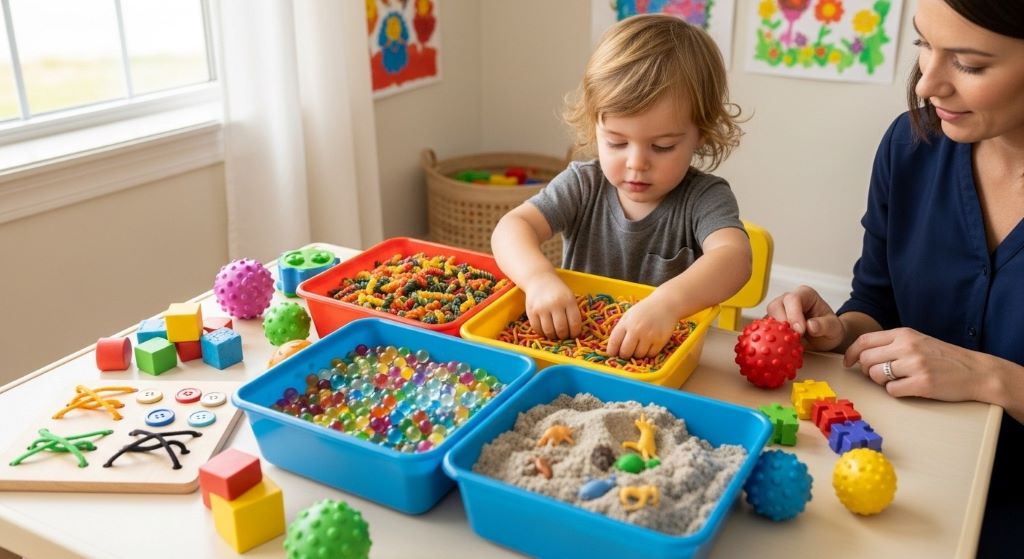
Organize materials by therapeutic function while maintaining playful presentation. Sensory bins address tactile processing goals while appearing like fun exploration stations. Building materials support fine motor development disguised as creative construction play.
Rotate toys and activities regularly to maintain interest and target evolving therapeutic needs. However, keep core comfort items consistently available for emotional regulation. Predictable organization helps children with anxiety or autism spectrum needs.
Include movement opportunities within play spaces. Climbing structures, balance beams, and crash pads support physical therapy goals through active play. Additionally, movement breaks between focused activities maintain engagement during longer sessions.
Selecting Therapeutic Play Materials
Choose multi-purpose materials addressing multiple therapeutic goals simultaneously. Playdough strengthens hands while encouraging creative expression and following directions. Building blocks develop spatial reasoning, fine motor control, and frustration tolerance together.
Sensory materials prove essential for many therapeutic needs. Kinetic sand, water beads, and textured fabrics support sensory integration goals. Moreover, these materials naturally calm anxious children while addressing occupational therapy objectives.
Social skills benefit from cooperative games and role-play materials. Dress-up clothes, play kitchens, and dollhouses facilitate practicing communication and emotional recognition. Therefore, dramatic play becomes therapy for social development challenges.
Art supplies offer excellent therapeutic versatility. Drawing, painting, and sculpting provide emotional expression outlets while building fine motor skills. Additionally, art activities create non-threatening ways to discuss difficult feelings and experiences.

Incorporating Speech Therapy into Play
Language development happens naturally during play-based activities. Narrate play actions using target sounds and vocabulary words. For example, building block towers becomes practice for positional words and requesting skills.
Turn-taking games create natural opportunities for conversational exchanges. Simple board games require children to ask questions, make requests, and follow verbal instructions. However, keep games short enough to maintain engagement without frustration.
Puppet play encourages reluctant speakers to communicate through characters. Children often speak more freely when pretending the puppet talks rather than themselves. Moreover, therapists can model correct articulation through puppet voices.
Story-based play supports comprehension and narrative skills. Act out favorite books using props and costumes, encouraging children to retell sequences. Additionally, create original stories together, targeting specific language structures therapeutically.
Integrating Occupational Therapy Through Play
Fine motor skills develop through countless play activities. Lacing cards, pegboards, and small manipulative toys strengthen hand muscles disguised as games. Threading beads becomes both jewelry-making fun and therapeutic exercise.
Sensory play addresses processing challenges while appearing purely recreational. Shaving cream activities, treasure hunts in rice bins, and water play all provide therapeutic sensory input. Therefore, children receive needed sensory regulation through enjoyable exploration.
Gross motor development happens through active play naturally. Obstacle courses, dance parties, and playground activities build strength and coordination. However, therapists can structure these activities to target specific motor planning goals.
Self-care skills integrate into pretend play scenarios. Dressing dolls teaches buttoning and zipping. Play kitchens practice utensil use and meal preparation sequences. Additionally, these activities feel purposeful rather than purely therapeutic.
Using Play for Emotional and Behavioral Therapy
Play provides safe emotional expression when words feel inadequate. Art projects, sand tray therapy, and dramatic play allow children to process difficult feelings indirectly. Therapists observe play themes revealing underlying emotional needs.
Emotion regulation strategies integrate into games naturally. Simon Says teaches impulse control through playful challenges. Calm-down corners with sensory tools become cozy play spots rather than punishment areas.
Social skills practice happens through structured play dates and group activities. Board games teach turn-taking and winning graciously. Cooperative building projects develop teamwork and communication. Moreover, natural consequences during play teach better than lectures.
Trauma processing occurs safely through play therapy techniques. Therapists trained in trauma-informed play help children work through experiences at their own pace. Therefore, healing happens without requiring children to verbalize traumatic details before ready.
According to the American Academy of Pediatrics, play is essential for healthy brain development and helps children develop the skills they need to engage with the world around them.
Structuring Therapeutic Play Sessions
Begin sessions with familiar, success-guaranteed activities building confidence. Warm-up play helps children transition into therapeutic work mentally and emotionally. Additionally, starting positively increases cooperation for challenging activities later.
Introduce therapeutic targets gradually within engaging play contexts. Spend 70 percent of session time on child-preferred activities and 30 percent on therapist-directed challenges. However, adjust ratios based on individual tolerance and therapeutic urgency.
Provide choices within structured frameworks. Offer two appropriate activity options rather than unlimited choices. This balance gives children agency while maintaining therapeutic direction. Moreover, choice reduces power struggles significantly.
End sessions with calming activities and positive reinforcement. Review accomplishments and preview next session briefly. Therefore, children leave feeling successful rather than exhausted or frustrated.
Training Parents and Caregivers
Parents become co-therapists when trained in play-based therapeutic techniques. Simple strategies practiced during daily routines extend therapy beyond clinical sessions. Consequently, children make faster progress with consistent home support.
Teach parents to follow children’s lead while incorporating therapeutic goals naturally. Model how everyday activities become learning opportunities. For example, cooking together addresses following directions, sequencing, and fine motor skills.
Provide specific play activity suggestions targeting home practice goals. Written instructions with photos help parents replicate therapeutic play successfully. Additionally, video examples demonstrate proper technique and expected child responses.
Schedule regular check-ins discussing progress and adjusting strategies. Parents need ongoing support implementing therapeutic play consistently. Moreover, celebrating small victories maintains parental motivation during challenging periods.
Adapting Play for Different Developmental Levels
Infants and toddlers require sensory-rich, movement-based play. Peek-a-boo games support object permanence while building attachment. Stacking rings develop hand-eye coordination through playful interaction.
Preschoolers benefit from imaginative play incorporating therapeutic goals. Pretend play scenarios teach emotional vocabulary and social scripts. Building activities develop patience and problem-solving alongside motor skills.
School-age children respond to games with clear rules and competitive elements. Strategy games teach planning and flexible thinking. Craft projects support focus and task completion. However, ensure success opportunities preventing discouragement.
Teenagers need age-appropriate play disguised as hobbies or interests. Video game discussions address social skills and emotional regulation. Creative projects provide expression outlets. Additionally, physical activities support stress management and body awareness.
Measuring Progress in Play-Based Therapy
Observe skill improvements during natural play rather than formal testing when possible. Note how children independently use strategies learned through therapeutic play. Therefore, assessment feels organic rather than evaluative.
Document play themes and complexity changes over time. Increased imaginative play depth indicates cognitive growth. More cooperative play suggests developing social skills. Moreover, these observations guide therapy adjustments.
Use video recording to track subtle progress parents might miss daily. Comparing clips from different time periods reveals incremental improvements. Additionally, videos help identify which play activities produce best therapeutic results.
Maintain collaborative goal-setting with families. Regular reviews ensure therapy targets remain relevant and achievable. Celebrating progress through play-based demonstrations rather than reports increases child investment.
Overcoming Common Challenges
Some children initially resist structured therapeutic play. Start with purely child-directed play, gradually introducing therapeutic elements. Building trust takes precedence over immediate progress. However, patience during this phase pays long-term dividends.
Limited resources need not prevent effective play-based therapy. Household items provide excellent therapeutic materials. Cardboard boxes, dried beans, and kitchen utensils support countless therapeutic activities. Therefore, creativity matters more than expensive toys.
Busy schedules challenge consistent implementation. Integrate therapeutic play into existing routines rather than adding separate sessions. Bathtime becomes sensory play, meals incorporate following directions, and bedtime includes calming activities.
Sibling dynamics complicate home-based therapeutic play. Designate one-on-one time for focused therapeutic work while involving siblings in appropriate activities. Moreover, group play teaches valuable social skills when properly facilitated.
Conclusion
Combining play-based learning with kids care therapy creates engaging, effective interventions for children facing various challenges. This integrated approach reduces therapy resistance while accelerating skill development across multiple domains. Whether addressing speech delays, sensory processing difficulties, emotional trauma, or social skills deficits, play-based methods honor children’s natural learning styles. Parents and therapists working together can transform therapeutic goals into joyful play experiences. Therefore, children develop essential skills while experiencing childhood’s natural pleasures. The investment in play-based therapeutic approaches yields lasting benefits extending far beyond immediate treatment goals.
Frequently Asked Questions
What is the difference between regular play and therapeutic play?
Therapeutic play incorporates intentional goals targeting specific developmental or emotional needs while maintaining playful engagement. Regular play is child-directed without structured objectives. However, both types support healthy development, and therapeutic play should feel enjoyable rather than clinical to children.
Can parents do play-based therapy at home without professional training?
Parents can implement many play-based therapeutic strategies at home, especially with professional guidance. However, complex issues like trauma, severe developmental delays, or behavioral disorders require trained therapists. Parents should work collaboratively with professionals who provide specific techniques for home practice.
How long does play-based therapy take to show results?
Progress timelines vary based on individual needs, consistency, and challenge severity. Some children show improvements within weeks, while others require months of consistent intervention. Regular sessions combined with home practice typically produce faster results than weekly therapy alone.
What age ranges benefit most from play-based therapy approaches?
Children from infancy through adolescence benefit from play-based therapeutic methods, though activities differ by developmental stage. Younger children typically respond more naturally to play therapy, but modified approaches work effectively for teenagers using age-appropriate activities like art, music, or movement.
How much does play-based therapy cost compared to traditional therapy?
Costs vary widely based on location, provider credentials, and insurance coverage. Play-based approaches typically cost similarly to traditional therapy sessions, ranging from 75 to 200 dollars per session. However, the engaging nature may reduce total treatment duration, potentially lowering overall costs.
Related Topics:
Sorry, the comment form is closed at this time.